
🏡💚 Our big questions for 2026
I was planning on starting off the year by forecasting some of the biggest questions we think might be answered in 2026. And I’m still going to do that. But the start to the year has only shown just how impossible it is to predict what the important events are going to be.
The murder of Renee Good by an ICE agent in Minneapolis immediately brings to mind the police killing of George Floyd in the same city. The uprisings in the wake of George Floyd’s death were then considered the largest in US history, and they caused society-level shifts in politics and culture. I don’t know that this week’s ICE murder will set off the same level of sustained mass protest, but I wouldn’t be surprised if it did, or if that’s coming sometime soon. Trump and his goons are increasingly perpetuating a Mafia-style criminality domestically and abroad, and the pressure building in cities and states with an active ICE presence feels like it’s ready to explode.
The focus of this newsletter is the politics of climate and housing in California, and the growing movement for green social housing. While that remains true, it’s impossible to ignore the wider political terrain of social movements and mass struggle. The national movement for a Green New Deal launched into prominence in the second half of Trump’s first administration. Its power came from its ability to weave together the calls for climate, economic, and racial justice into a narrative for national renewal through public investment. It was a prescription for what could come after Trump, hope that we would not just return to the status quo, but that we could begin a collective project of building something better.
That movement helped to center the issue of climate change in the national discussion. But I also think that the George Floyd protests played a huge role in making sure a future climate package included some explicit attempts at racial repair. This came to fruition through the Inflation Reduction Act, as flawed as it was, which included clean energy tax credits and other funding for climate resilient infrastructure, but also various equity and environmental justice provisions. The IRA’s subsequent dismantling in Trump 2.0 doesn’t exactly make it a success story, but its formation is indicative of the ways that disparate movement struggles can flow into a larger policy agenda.
With that in mind, my first question for 2026…
How will these crises converge in California this year?
ICE raids; climate disasters; a housing crisis; the ever-rising cost of living; imperial violence abroad, whether in Venezuela or Palestine.
If last year is any preview, we can expect all of these crises to impact the lives of people in California. While everyone will continue to feel their effects, the question is if a unified struggle can bring them all together into a political agenda. We need to be able to make sense of what people are seeing and experiencing in their lives, and redirect the perceived cause of those social ills away from powerless minorities and toward the powerful oligarchs that profit from it all.
As the home to many of those oligarchs, California is a key testing ground for that message. And while we don’t have a Presidential election this year, we do have a Governor’s race. Zohran Mamdani’s mayoral campaign showed how sub-national elections have the potential to bring together these different threads into a charismatic narrative — one that stays relentlessly on message about addressing the affordability crisis through concrete plans to improve the lives of the working class. So far, I’m not confident we have a Zohran-style campaign emerging for Governor, but the candidates are undoubtedly taking notes on his success, and hope to capture some of that energy.
Which brings me to the next question…
Will a gubernatorial candidate emerge as a social housing champion?
According to a poll last year, housing was far and away the single highest priority for California voters. With an already crowded field of candidates to be the next Governor, each will have to try to distinguish themselves from the pack. How is their solution on housing any different from the rest? How is it different from what we’ve already been doing?
I don’t expect social housing to become the solution for any of the candidates. But there is a wide open lane for someone to make it a key pillar of their housing strategy, and to articulate a social housing approach to the issue: one that does not give primacy to the market to solve the housing crisis, but instead insists upon a set of policies and programs that make housing more social. That means tenant protections to keep people stable (taking the lesson from Zohran’s promise to freeze the rent), funding for affordable housing, and a package of policies that favor community and public ownership at the expense of corporate landlords.
This likely won’t happen through some kind of policy conversion where one of the candidates suddenly “sees the light” of social housing. Instead, we will need to make it an issue they can’t ignore.
Will the politics of climate and housing be different this legislative cycle?
Beyond the Governor’s race, the politics of climate and housing will continue to shape the legislative discussions in Sacramento. Despite the urgency to address them, so far there is not a lot of promise that this year will be one for transformative policies.
Last year’s legislature proved to be one of the least tenant-friendly in a long time, and climate issues have taken a backseat to affordability. The best version of a Green New Deal agenda is about addressing climate change through actions that materially improve people’s lives; I think that is still possible. But climate on its own is not an animating priority right now.
As Newsom continues to make his Presidential case for 2028, he is much more likely to take a moderate position than to take big swings on progressive issues. But he may want to make some kind of “closing argument” for his track record as Governor — what will that be, and how can we shape it?
On the housing and land use front, the big push last year was to go after CEQA in an “Abundance agenda”-style move to cut back regulations. I think it’s safe to say that the housing crisis won’t just resolve itself overnight as a result of those changes, so the question of what to do on housing will still be front and center. Maybe the pendulum will swing back toward some tenant protections, or considering things that the public sector can do to create permanently affordable housing at scale.
When and where will the next disaster hit?
Just after the one-year anniversary of the LA wildfires, it’s impossible not to think about what has changed since then. Other places have gone much deeper than I will reflecting on the past year (the LA Times has a lot of stories on this), but I will say that, considering how traumatic and destructive those fires were, it is a bit shocking how little it feels like they have altered the politics of climate and housing. Yes, there is more attention to the issues on home insurance, and an ongoing discussion about “home hardening” efforts to make houses more fire-resistant. But are we better prepared for the next climate disaster? I’m not so sure. And though we don’t know when, where, or how the next disaster will hit, it’s a guarantee that something will.
As grassroots, base-building groups — and those that work alongside them — there is a big opportunity to anticipate and prepare for those disaster events. What is your organizing plan on day zero? What’s your message? What policies are you ready to demand, and how are you going to mobilize?
Our coalition is actively working on tools and trainings to help people answer those kinds of questions. If you are at all interested in learning more, please reach out.
Who will pay?
We know the federal government won’t. California is still in a protracted struggle just to get federal aid for the LA wildfires, not to mention the federal gutting of our social safety net.
Plugging the holes in key programs is just the first part of the challenge. We also know that all of our priorities will require more investment — there’s no green social housing agenda that doesn’t depend on massive public resources. Where is that money coming from, and who is going to pay for it?
One low-hanging fruit is the proposed housing bond that is moving through the legislature, a $10 billion bond that will fund a range of affordable housing programs. In particular, we and our allies are supporting the $500 million allocation for acquisition and preservation funding, money that could support community land trusts and other forms of public and community ownership.
Though it’s still a significant step forward, traditional bond funding isn’t going to be nearly enough to get us to the level of sustained funding we’ll need. SEIU-UHW is leading the charge for a wealth tax, a one-time 5% tax on billionaires to shore up the health care system and safety net. Newsom is maintaining his strong opposition to this, and the capitalist class is on the attack to quash it as soon as possible. Others are exploring alternative revenue measures, all of which face their own challenges.
We all know that someone is going to pay for the cost of these crises. Either they will borne by the most vulnerable or the most unlucky, or we can point the finger at the people who have made astronomical amounts of money that they will never hope to spend in their lifetime.
The truth is that we will all have to pitch in to address these crises. That means taxes, yes, but it also means actions in our daily lives, big and small. For our coalition, we’ve called 2026 the Year of Organizing. We’re putting our time and resources into supporting organizers on the ground in hopes that we can contribute to the mass movement that we’ll need to transform the politics of our state, and our country. We hope you’ll join us in whatever way you can.
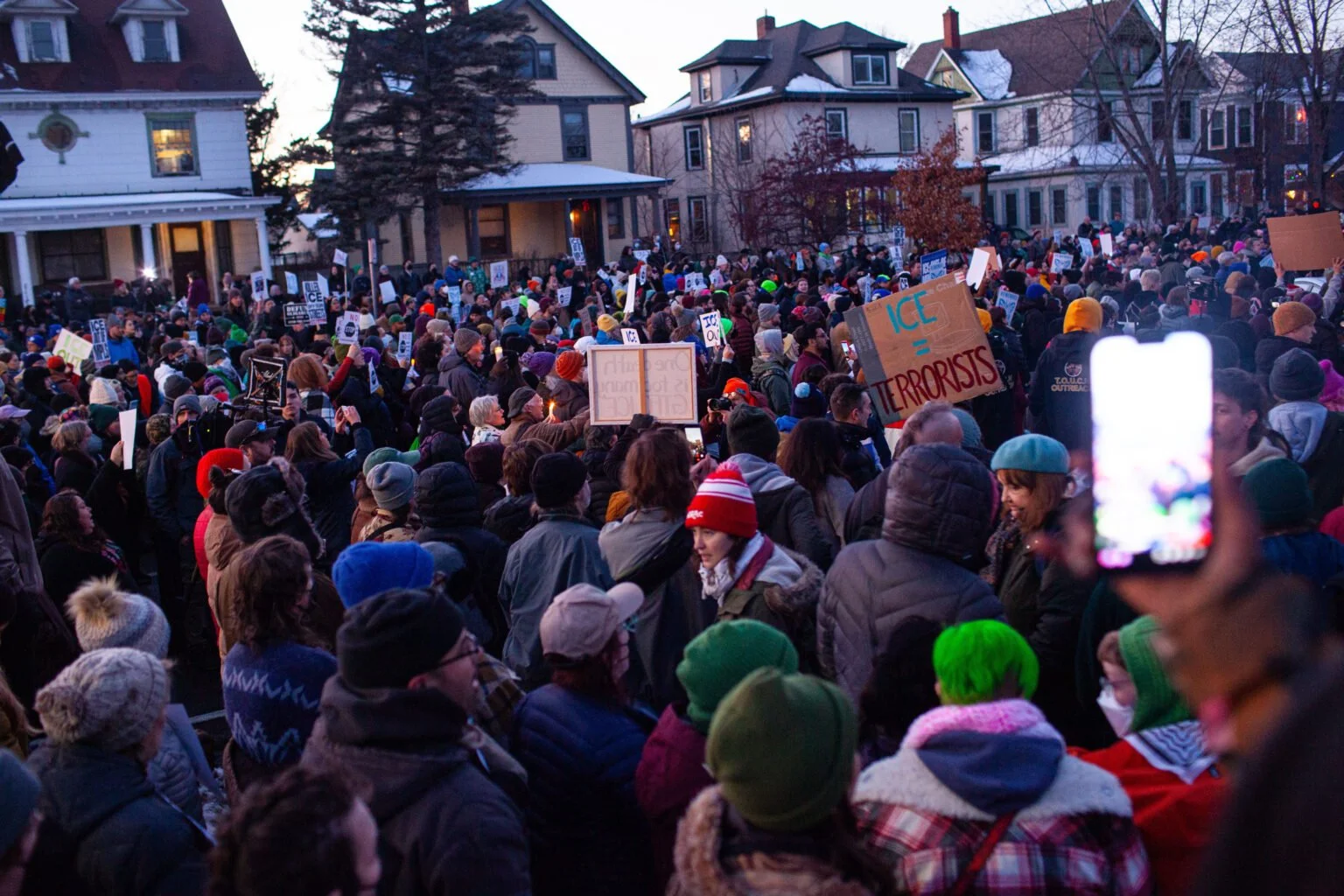
Vigil in Minneapolis for Renee Good Source: Minnesota Reformer
WHAT WE’RE READING
Which City Burns Next? (NYTimes) - op-ed by David Wallace-Wells about the challenges of urban fires, which might not be as “wild” as we make them out to be
What Critics Get Wrong About Inclusionary Housing (Shelterforce) – piece written by Quintin Mecke, Executive director of the Council of Community Housing Organizations
Maui Vacation Rental Bill That Divided Community Is Signed Into Law (Honolulu Civil Beat)
Feel free to reply any time! I always enjoy hearing from people and getting any feedback/questions/additional thoughts.
We send these out on a somewhat weekly basis. If you don’t want to get these newsletters, feel free to unsubscribe below. If you know someone that would be interested, send me their email, or you can forward this along to them and they can use this link to subscribe.
