
🏡💚 YIMBY on attack and punching down
A few weeks ago, an incendiary op-ed was published that took direct aim at many of our movement partners and allies. You’re not alone if you completely missed this, since it wasn’t published in a news source intended for a wide audience.
The piece, titled “Philanthropy Needs to Pick a Side on the Housing Construction Debate” was instead published in Inside Philanthropy, a news source and resource for donors and funders that was created to be “an indispensable resource for philanthropy professionals.” Written by the former Policy Director at California YIMBY, the article calls on philanthropy to shift funding away from groups that have opposed YIMBY-sponsored legislation, expanding on a research memo that details philanthropic funding to organizations that have opposed YIMBY policies.
The policy discussion and substance of the piece is rather unremarkable, rehashing the same arguments that are familiar to anyone that has previously read any YIMBY material. But I think it is extraordinarily revealing in three ways: (1) it is representative of the narrative success of the YIMBY movement, (2) it demonstrates the political position in which they see themselves, and (3) it calls out a number of organizations by name as antagonists in this story.
YIMBY’s Pro-Housing Narrative Strategy
No matter what sector you work in, I think we could all learn a thing or two from the narrative success of the YIMBY (“Yes in My Backyard”) movement. YIMBY most often advocates on extremely technical and wonky policies like zoning, housing finance, land use law, and permitting reform. And yet they have taken all of that and distilled it into the most simple message: we are pro-housing. They have hammered this phrase so much that it now accompanies them practically anywhere they are mentioned. Of course, it also helps that they are most nominally set up in opposition to NIMBY (“No in My Backyard”) forces, a pejorative that typically refers to groups of residents that oppose new development near where they live.
This has been a brilliant move and has been wildly successful. Because in addition to being known as the pro-housing groups, they are also able to label anyone that opposes them as anti-housing. And they are increasingly weaponizing that phrase: though not used explicitly in this article, it is deployed extensively in the accompanying research memo, titled “Foundation Funding of Anti-Housing Groups.”
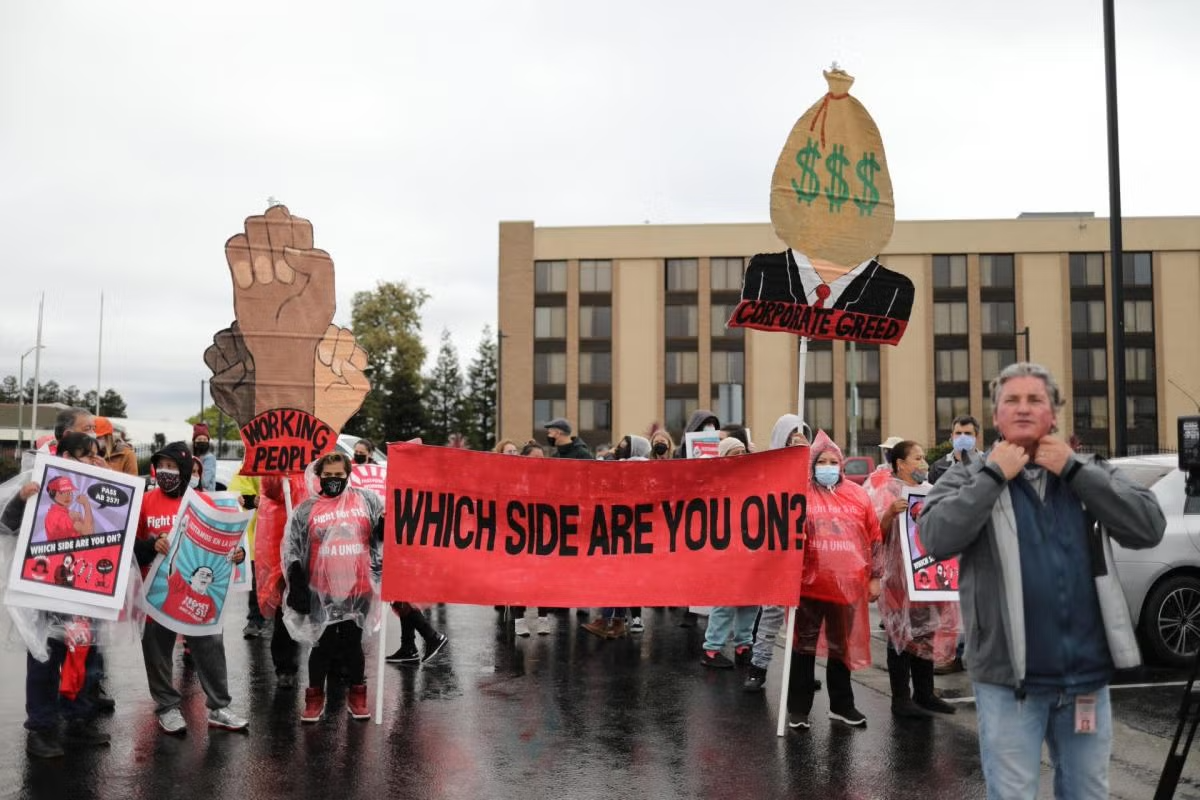
The implied question of “whose side are you on?” is central to all narrative strategies, creating a story of protagonists and antagonists amidst a confusing and shifting world, and helping the audience discern and navigate it. The ‘pro-housing’ framing does this almost comically well – when it comes to the issue of housing, are you for it or against it? If you say you’re pro-housing, then they’ve got the prescription for you. If you start to disagree with them, you’re instantly on the wrong side of one of the most pressing moral issues of our time.
In 2025, the YIMBY movement has been supercharged by the release of the Abundance book, and the subsequent reaction and response. Even if you didn’t like the book you were helpless to ignore it, as it set off an overwhelming discussion that included people at all different positions of power and proximity to your life, from your uncle to Gavin Newsom. In California, all of this culminated when Governor Newsom signed the CEQA reform package included in the state budget where he called out YIMBY and Ezra Klein by name (“Go YIMBY”). Which leads to the next point…
An Emboldened YIMBY
All of this success has changed the politics of housing, which is reflected in this piece. I should caveat this with the acknowledgement that the author does not speak for all YIMBY groups or supporters, and that there is quite a bit of variety within the YIMBY movement. There are many YIMBY groups that have been big advocates for things like rent control, and those who have authentically sought to build bridges with social movement groups. But I think the article reveals the way in which at least some segment of the YIMBY movement is changing their political orientation.
For the most part, in the past YIMBY groups have at least felt the need to “play nice,” and at minimum pay lip service to their interest in building relationships with environmental justice communities and racial justice advocacy organizations. Others have earnestly tried to reach out to these groups, start some dialogue, and find common cause.
To me, this article shows that for some YIMBY supporters, that time is over. When they were still a fledgling interest group, it was important to try to work collaboratively, to try not to piss too many people off, and form coalitions of partners to win support and pass legislation. Now it seems they feel that they no longer need to try to forge those alliances, and that actually those community groups should not just be cast aside, but fully cast out.
Naming Names
Going well beyond gesturing toward some nebulous opponents, the article names specific organizations that are part of the problem. This includes close allies and coalition members including CEJA, SAJE, PolicyLink, 350, and Center for Biological Diversity. In fact, this is only a very small selection from the longer research memo that names many more groups, and explicitly calls them out as “anti-housing” or “NIMBY.”
It is obviously very provocative to publicly call out organizations. But the context of this piece makes it more insidious – remember: this was placed in a news source for philanthropy. The goal is not just to discredit, but to defund.
The article does say “Foundations probably should not cut off such groups outright,” but (A) this is clearly disingenuous given the context, and (B) the word ‘probably’ is not doing much work in that sentence.
Look – obviously, I think all of this is messed up and wrong on many levels, ethically and factually (it’s worth noting the memo contains a number of errors). Attacking and going after the resources of groups that organize and work with poor communities of color is just clearly villainous. But it’s really the combination with the narrative strategy that makes this all so politically problematic.
After YIMBY has framed the debate as pro- or anti-housing, articles like this try to cast EJ and racial justice advocates as the anti-housing opposition – instead of, I don’t know, the private equity groups rapaciously acquiring homes for profit, the billionaires hoarding all of society’s resources, the slumlords leaving homes to languish, the long history of public disinvestment in affordable housing. This is punching down to an extreme, blaming a relatively powerless minority as the reason we don’t have enough housing.
This isn’t just morally wrong – buying into that story sets us down the wrong path. That path would have us further disinvest from poor communities and communities of color, and make changes to the housing regulatory framework in the hope that the market will just do its thing (which, historically, has also not been kind to poor communities and communities of color).
There’s a different path, one that we support within a green social housing framework. Yes, we need to build more housing. But we should make sure the housing we invest in will be permanently affordable. We should force the market to act in socially beneficial ways, instead of sprawling out into fire-prone areas or demolishing rent-controlled apartments to build luxury units. We should support tenant protections that provide immediate relief. And we should support acquisition to ensure the affordable housing we currently have actually stays affordable.
Our green social housing campaign sets up a very different narrative front. The opposition is a system that treats housing as a commodity for profit, instead of one that provides it as a human right. It’s that same system that commodifies the resources of the Earth for profit, even if it brings us closer and closer to ecological collapse. The villains are not community organizers and communities that live near oil wells, but corporate landlords that drive up rents and make life worse for tenants.
Those are the battle lines that should be drawn. When it comes to housing people or making profit, whose side are you on?
Source: SEIU 1021
WHAT WE’RE READING
The Quick and Shameful Death of Biden’s Biggest Policy (New Republic) — highly, highly recommend this piece if you’re at all interested in thinking back on the IRA and what went wrong.
LA Wildfire Survivors Want to Rebuild All-Electric, but a Utility Is Using Customer Funds to Incentivize Gas Appliances (Inside Climate News)
Oregon pilot program giving cash to homeless youths sees staggering reduction in homelessness (Street Roots)
Healthy Homes Or Hollow Promises In New Orleans? (Shelterforce)
‘The New Price of Eggs.’ The Political Shocks of Data Centers and Electric Bills (NYTimes)
Millions Could Lose Housing Aid Under Trump Plan (ProPublica)
Feel free to reply any time! I always enjoy hearing from people and getting any feedback/questions/additional thoughts.
We send these out on a somewhat weekly basis. If you don’t want to get these newsletters, feel free to unsubscribe below. If you know someone that would be interested, send me their email, or you can forward this along to them and they can use this link to subscribe.
